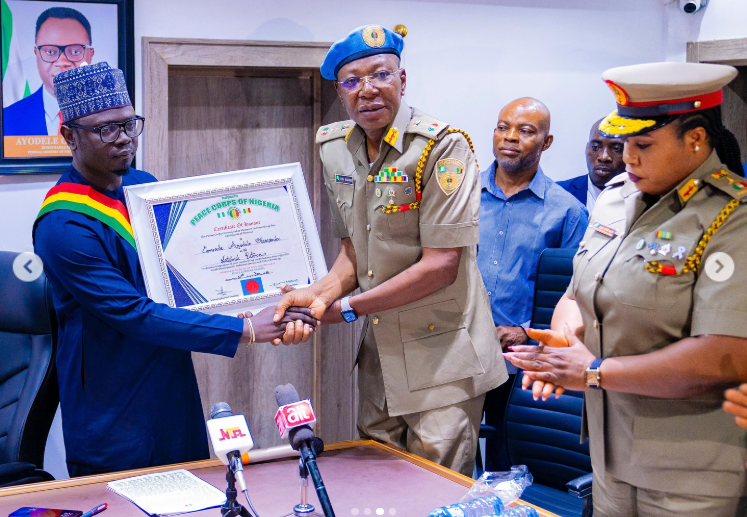
Establishment of Peace Corps of Nigeria

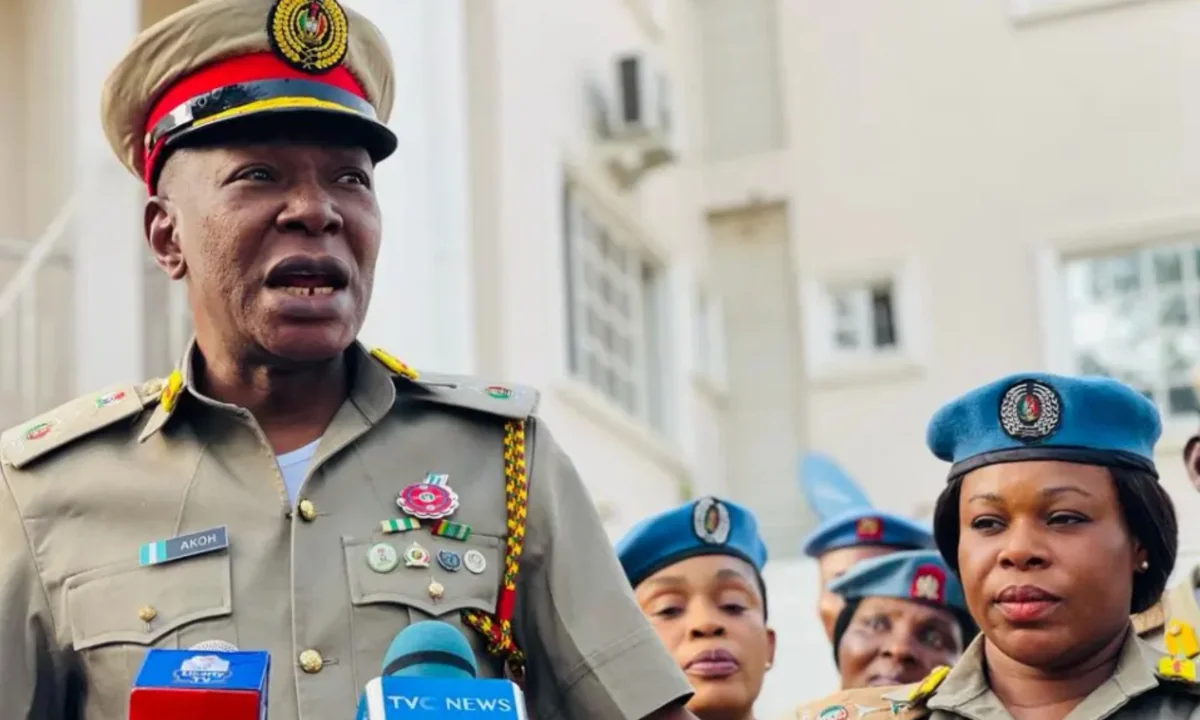
Peace Corps of Nigeria is a non-governmental, uniformed youth organization, that is committed to promoting national creativity, peace and youth development. Established on July 10, 1998, in Kaduna, North West Nigeria, by youth development advocate and strategist, Dr Dickson A.O. Akoh, FCITr, FCPA, FNSIS.

The Corps is registered in Nigeria with the Corporate Affairs Commission, under the Companies and Allied Matters Act of 1990, Part C. In line with its mandate, the Peace Corps of Nigeria was accorded formal recognition by the Federal Government of Nigeria, through the Federal Ministry of Education and the Federal Ministry of Youth Development, respectively.

The Corps was equally granted special consultative status by the Africa Union (AU) and the United Nations Economic and Social Council (ECOSOC). As at June 2019, the Peace Corps of Nigeria had registered over 113,822 Permanent Staff Officers and 78,247 Volunteers and established State Commands in all the 36 states of the Federation and the Federal Capital Territory.

Traditional Rulers To Table Peace Corps Bill Assent Before Tinubu

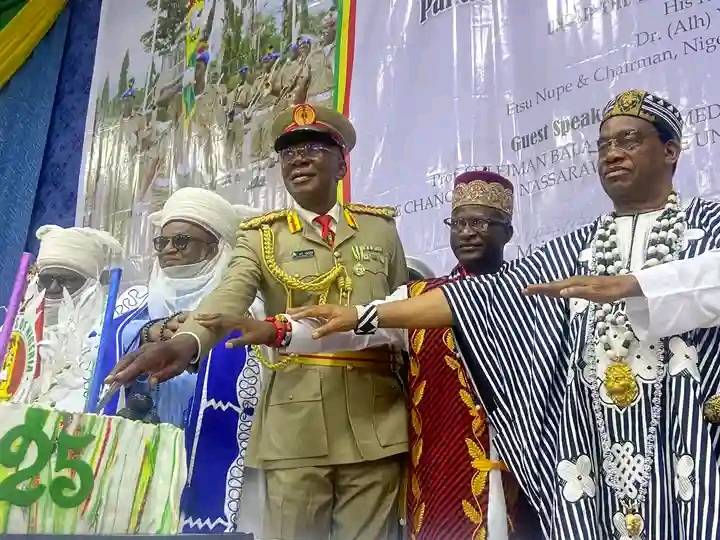
Three prominent traditional rulers on Monday in Abuja hinted that monarchs in the country will table before President Bola Ahmed Tinubu the need to give Presidential Assent to the Bill of the Peace Corps of Nigeria to make it a statutory body.

The traditional rulers, Etsu Nupe, Dr Yahaya Abubakar, Tor Tiv, Professor James Ayatse and the Ochi-idoma of Idomaland, Dr John Eliagwu expressed optimism that making Peace Corps a government establishment would not only create jobs for the teaming jobless youths but will considerable reduce crime rate in the country.

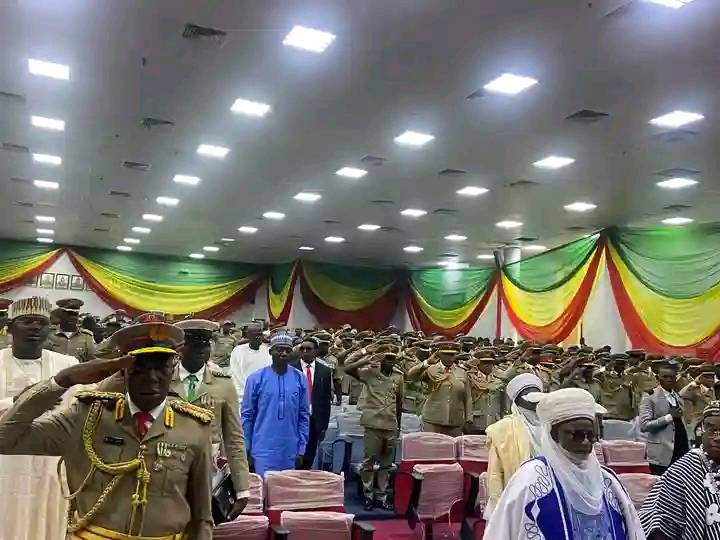
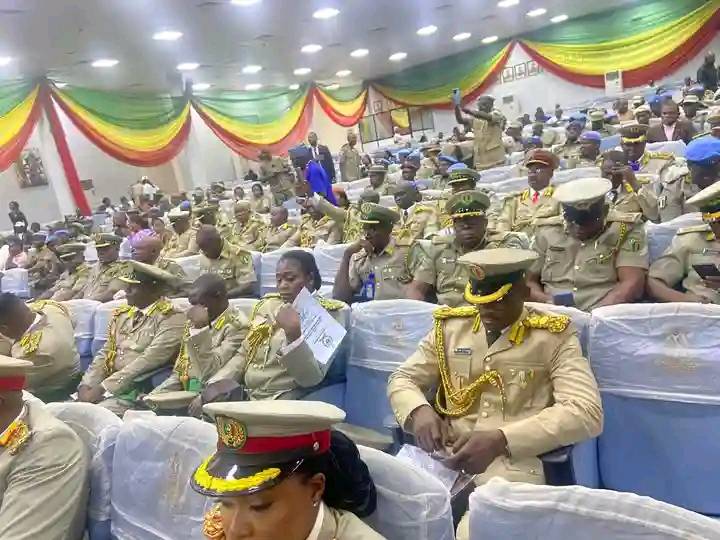
In their separate remarks at a public event put together by the Peace Corps, the three monarchs pleaded with President Tinubu to immediately give a second thought to the issue of transforming the Peace Corps from a non governmental organization to a government body.

At the public function attended by top Federal Government functionaries, Etsu Nupe said that monarchs in the country would deliberate on the Peace Corps matters, come up with a position paper that would be tabled before President Tinubu.

He blamed the past refusal of assent to the PCN Bill on misconception adding that the Corps was not founded to wrestle power from any other security agency but to contribute to youth development and crime reduction through robust intelligence gathering at the grassroots level.

“The truth is that without peace, no one in the country would be able to worship his or creator. Peace Corps mission was unjustly misconstrued, the monarch said.

The Chairman, Niger State Council of Traditional rulers pleaded with the existing security agencies to allow Peace Corps come on board, cooperate with it, collaborate with it in the peace initiative that would reduce incidences of I security in the country.

He lauded the initiative of the founder of the organization, Dr Dickson Ameh Akoh and the resilience that had sustained the body in the past 25 years in the face of stiff opposition.

The Tor Tiv and Chairman of Benue State Council of traditional Rulers said that monarchs stand for the course of the Peace Corps and would mobilize themselves and well meaning Nigerians to give support for the Bill to be assented to.

He said with the strong voice of Etsu Nupe in the National Traditional Council, what is humanly possible would be done to get President Tinubu’s assent for the PCN Bill.

“We are the closest people to the grassroots level. We know what peace means and what the Peace Corps can do. We are begin other bodies not to see PCN as threat. There is no room for competition but complementation with each other.

In his own remarks, the Ochi-idoma pleaded with Tinubu to give approval for the Establishment Act to further demonstrate his concern to address unemployment among youths.

National Commandant of the Corps had recalled with regret how The 8th and 9th National Assemblies passed the bill for the Establishment of the Corps as a statutory body but was not assented to by the Presidency.

Akoh noted that during the stiff opposition to the existence of the body, he was detained for seven and half years while the Corps won over 30 cases in court.

He praised the resilience of officers and volunteers of the Corps for remaining committed to the noble cause of the organization inspite of the numerous challenges.

Writen by Kayode Lawal, Abuja


Peace Corps National Commandant, Dr Akoh Seeks Buhari’s assent to Nigeria Peace Corps Bill

The National Commandant of the Peace Corps of Nigeria (PCN), Dr Dickson Ameh Akoh has appealed passionately with President Muhammadu Buhari to  this time around, assent to a Bill for an Act that would make the organization a statutory body.
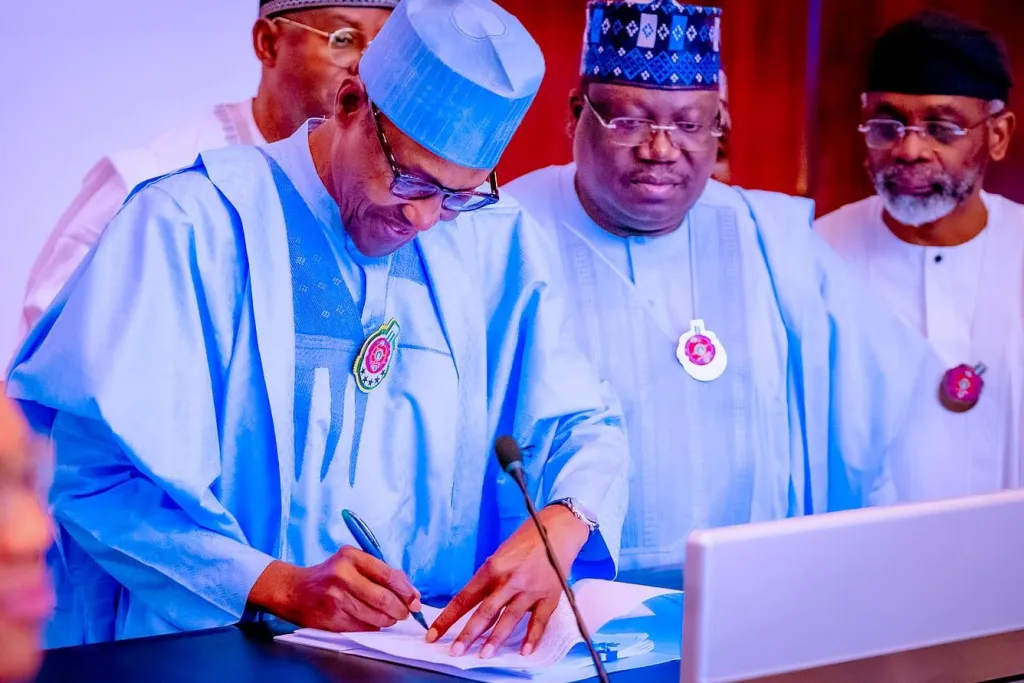
The Bill for an Act to Establish the Nigerian Peace Corps (NPC) passed by the two Chambers of the National Assembly is currently on the table of President Buhari for assent having been transmitted to him last week.

However, addressing a World Press Conference on the development in Abuja on Thursday, Dr Akoh said that President Buhari will bequeath a lasting parting gift to the Nigerian youth and would be remembered for good when he assented to the Bill.

Justifying the need for Buhari to sign the Bill, Akoh explained that its entire contents, especially the functions contained in the Bill is a summation of an inclusive empowerment programmes for the youth and on how to harness their innate potentials for the over all tasks of nation-building.

According to him, the passage of the Nigerian Peace Corps Bill is not only timely, reassuring and a renewed hope for the Nigerian youth, but also a pointer to the fact that the political elites is still very much conscious of the social challenges confronting the youth and therefore, passionate on proffering solutions to the challenges to same in order to place the youth in the front burner of our  national life.

Akoh said to underscore the high level of acceptability of the Nigerian Peace Corps Bill, opinion polls conducted in 2017 by The Nation Newspaper, Naija.com and Nigerian Television Authority (NTA-Good Morning Nigeria) revealed that 89%, 76% and 97% respectively supported the establishment of the Nigerian Peace Corps.

Similarly, he said that Premium Times, an online publication and Punch Newspaper conducted opinion poll on the Bill and returned a favourable verdict of 85% and 93% respectively in its support.

“Concerned with the increasing waves of unemployment and high level of poverty in the land, both past and present administrations initiated different intervention policies to mitigate these challenges.

“Some of these initiatives are Subsidy Re-investment Programme (SURE-P), You- Win, Conditional Cash Transfer (CCT), N-Power, Government Enterprise and Empowerment Programme (GEEP), Government Intervention Funds (GIF), Nigerian Youth Investment Fund (NYIF) and Social Safety Net (SSN).

“It is a proven fact and incontrovertible reality that once these ‘Financial Handouts’ are no longer forthcoming or delayed in coming, these same Youths go back to the streets on protest or quickly revert to social ills and unproductive preoccupations, and even sometimes back-lashing the Government.

“However, it is advisable that a more robust, sustainable and institutionalized approach be adopted to ensure irreversibility of conditions and welfare status of our youths. In more developed economies, efforts are tailored towards the pre-occupation of the youths in productive ventures where they will be economically useful to themselves and the larger society.

“This is in addition to engaging them in moral, citizenship and leadership training aimed at character building and their valuable participation in nation-building.

“In the United States of America, for instance, the American Peace Corps was created as an agency to promote World Peace and Friendship by training American youths as volunteers to perform social and humanitarian services overseas, including Nigeria.

“The volunteers help communities in Developing Countries improve their Social and Economic conditions.

“The dynamic nature of insecurity in Nigeria today requires role differentiation as a panacea to expertise in addressing security challenges. It also requires multi- sectoral, multi- lateral and multi- dimensional approaches to tackle.

“In more advanced societies, Youth Based Organisations like the Nigerian Peace Corps, are established with the sole aim of engaging and pre-occupying the youths as a panacea to the social consequences of been unemployed.

“Similar organisations that exist in other parts of the world are: the American Peace Corps, Canadian Peace Corps, Bangladesh National Cadet Corps, Peace Officers Commission in China, Chinese Labour Corps, Lera Uniform Corps of Malaysia, Malaysian People Volunteer Corps, Production and Construction Corps of China.

“All these are consciously and deliberately designed to empower and socially pre-occupy the youths so that their state of idleness won’t be exploited adversely.

Akoh thanked the leadership and entire members of the 9th National Assembly for the extraordinary and unanimous support given to his Organisation all through the legislative processes leading to the eventual passage  of the Bill for an Act to Establish Nigerian Peace Corps.

He said that the overwhelming support accorded the Bill by the members of the Senate and House of Representatives would be recognised and celebrated by all bonafide members of the Corps.

“While we particularly note with deep appreciation, the cordial efforts and support for our Bill, it is our most considered view that the  members of the 9th Assembly, have through the passage of the Bill, demonstrated their strong passion and commitment to the emancipation of Nigerian Youth through  genuine youth empowerment and development, which are prerequisite for addressing the increasing wave of unemployment and its social consequences upon the nation.

“However, we assure them that when the history of this Organisation is written, their names will have a pride of place and be written in gold.

Akoh also thanked media in the country for the support to the Peace Corps and the eventual passage of the Bill.

“II wish to re-assure you that we will remain a veritable partner as we hope to transit from a Non-Governmental Organisation to a Government Agency with the anticipated assent of the Bill by Mr President”.

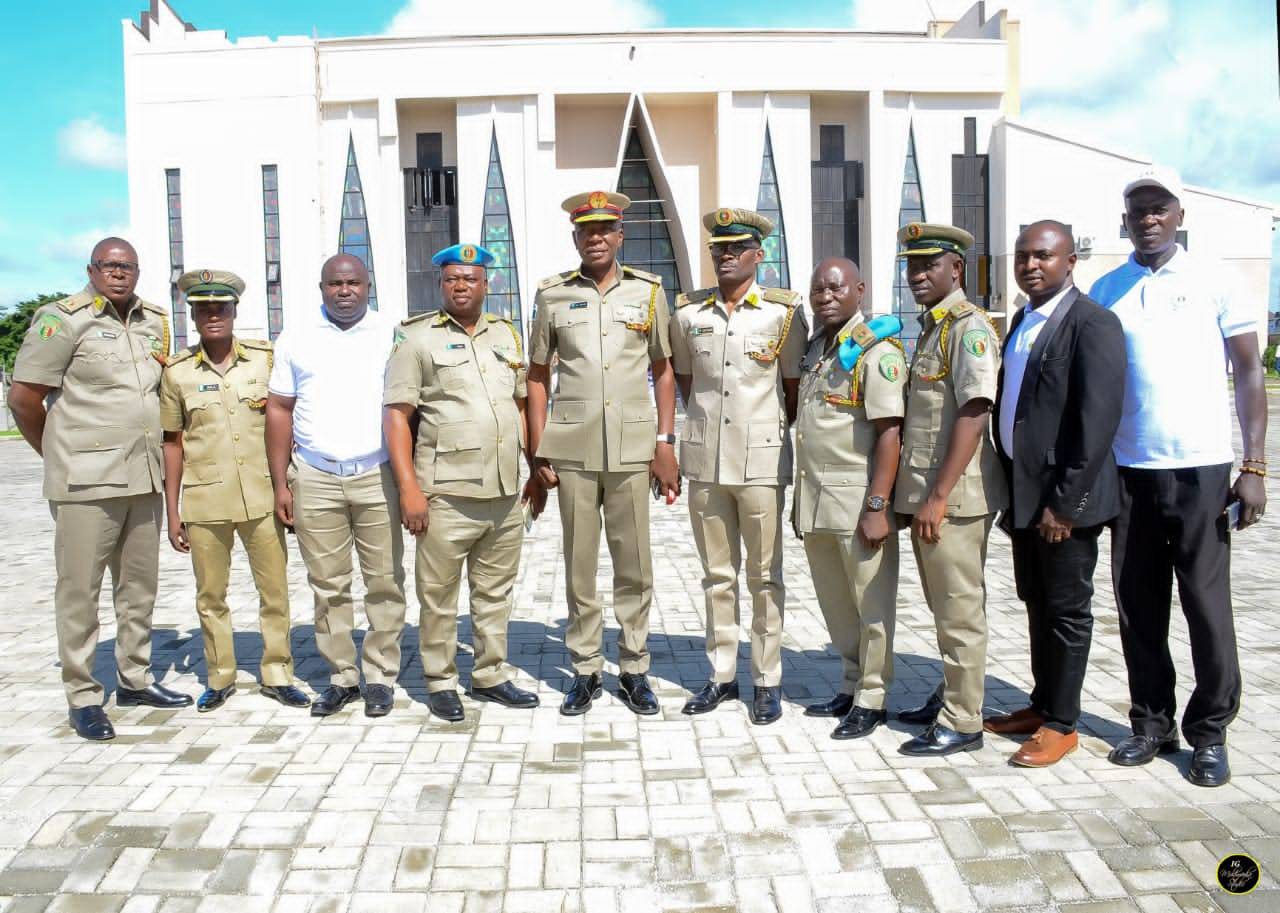
Senate Adopts Conference Committee Report on Peace Corps Bill


Nigerian Senate Adopts Harmonized Bill to Establish Nigeria Peace Corps

The Senate in plenary today adopted the Report of the Conference Committee, which was set up by both Chambers to harmonize the Bill for an Act to establish the Nigeria Peace Corps.

The Conference Committee, formed earlier in the year, completed its assignment on Wednesday last week. The report was laid and adopted by the House of Representatives on Thursday, 30th March 2023.

Harmonized Report and Key Highlights

The harmonized report adopted by the Senate followed the version passed by the House of Representatives. A key highlight relates to Clause 38 (1):

  • The Senate’s version sought the dissolution of the existing Peace Corps of Nigeria and the National Unity and Peace Corps.
  • The House of Representatives’ version recommends only the dissolution of the existing Peace Corps of Nigeria to transform it into the Nigerian Peace Corps upon presidential assent.

The report clarifies that for a Bill to become an Act of Parliament in Nigeria, it must pass through both Chambers of the National Assembly. The National Unity and Peace Corps Bill could not meet this requirement, unlike the Peace Corps of Nigeria Bill.

Opportunities Under the Bill

Clause 38 (8) provides a window for individuals, groups, associations, or bodies interested in joining the Corps to be absorbed, subject to mandatory basic training and orientation programs when the Bill is signed into law.

Committee Members

Senate Conference Committee

  • Senator Kashim Shettima, Chairman
  • Senator Abba Moro, Member
  • Senator Betty Apiafi, Member
  • Senator Oriolowo Adelere, Member
  • Senator Eyinnaya Abaribe, Member
  • Senator Seriake Dickson, Member

House Conference Committee

  • Hon Babangida Ibrahim, Chairman
  • Hon Tijani Kayode Ismail, Member
  • Hon Chinedu Ogah, Member
  • Hon Ibrahim Umar Potiskum, Member
  • Hon Abdulmumini Are, Member
  • Hon Legor Idegbo, Member

Background of the Peace Corps Bill

The Nigeria Peace Corps (NPC) Establishment Bill, passed in 2022, was sponsored in the Senate by Senator Ali Ndume and in the House by Chief Whip Rt Hon Mohammed Monguno (HB17). The Bill seeks to:

  • Establish the Nigerian Peace Corps as a body for youth development and empowerment
  • Provide gainful employment to youths
  • Facilitate peace, volunteerism, community service, neighborhood watch, and nation-building

Part VIII of the Bill, when assented to by President Buhari, will give statutory backing to the existing Peace Corps of Nigeria.

Organizational Overview

Established over 24 years ago under the leadership of Dr Dickson Ameh Akoh, the Peace Corps of Nigeria is incorporated under the Companies and Allied Matters Act (CAMA) and recognized by the Federal Ministry of Youth Development.

In recognition of its contributions to youth empowerment and peace-building:

  • The United Nations accorded it Special Consultative Status in 2011
  • The African Union accorded the same status in 2016

The organization maintains a structured network of offices in all 36 States and the Federal Capital Territory (FCT), delivering socio-economic and community-focused programs nationwide.


Peace Corps Award Ceremony – Dickson Akoh Applauded for Rural Development

Ogoli-Ugboju District in Otukpo Local Government Area of Benue State was, over the weekend of 9th December 2017, a cynosure of national attention as people thronged from far and near, defying the age-long maxim that “a prophet is not honoured in his own town.”

The Executive Governor of Benue State, Samuel Ortom; Michael Umale Adikwu, Vice Chancellor of the University of Abuja; Armstrong Adejo, an erudite historian of international repute; Comrade Abba Yaro, APC Chairman, Benue State Chapter; and others eulogised Dr Dickson Akoh, National Commandant of the Peace Corps of Nigeria, for his role in community development, rural sustainability, and nation-building.

Delivering his welcome address, Dr Akoh expressed his gratitude and appreciation to guests who attended the occasion organised to mark the Corps’ annual end-of-year award ceremony. According to him, the occasion “will be used to give awards and commendations to eminent personalities in recognition of their contributions to society, while encouraging them not to relent in doing more.”

Dr Akoh further stated that the rationale for hosting the event in Ogoli, a rural area, informed the choice of the theme for this year’s celebration: “Rural Sustainability and Nation Building: The Role of Social Organisations.” According to him, “for ideal and even development to take place, we must critically re-examine the near absence of social infrastructure in the grassroots.” In his final submission, he opined that for rural sustainability to be guaranteed, not only the government but also social organisations and philanthropic individuals should endeavour to contribute in this regard.

In his remarks, Governor Samuel Ortom, who was ably represented by his Deputy, Benson Abounu, expressed his delight at witnessing the important event organised by the illustrious son of the Idoma nation to revitalise rural life. According to him, Dr Akoh has rejuvenated rural communities and given them renewed vitality. He further stated that he is proud to be an Idoma man, noting that Dr Akoh has placed the Idoma name on the map of Nigeria, which explains why people from across the country gathered in Ogoli to celebrate with him.